Now Available — 2026
The New
Bottleneck
The New Delivery Model for the AI-Enabled Age
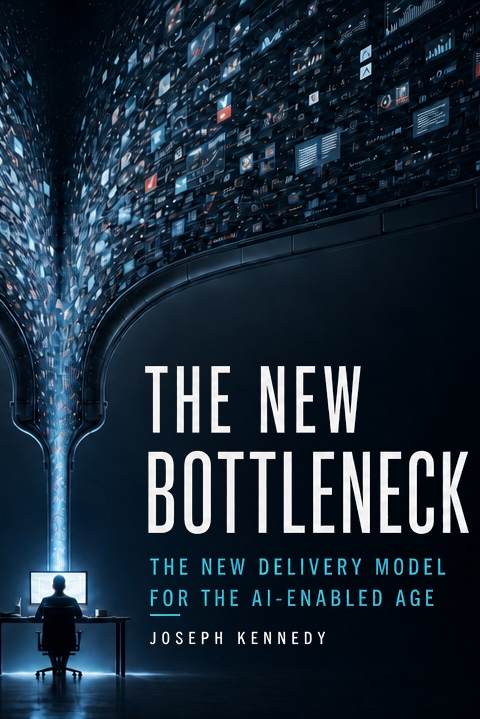
Click to view full cover
The New Delivery Model for the AI-Enabled Age
For decades, the hard part of software development was execution — writing the code, changing it, deploying it safely. That friction shaped how we worked: team structures, governance, documentation practices, career paths.
That constraint is gone. AI writes, refactors, integrates, tests, and restructures code at a pace no team can match — and it's accelerating every quarter.
What's taken its place? Meaning. If code can be generated quickly and refactored endlessly, then clarity of intent becomes the limiting factor. Poorly formed requirements aren't just a minor inconvenience — they're amplified, propagated, and baked into your architecture at machine speed.
This book is the practical guide to what you must change — in planning, in team structure, in how you write requirements — to thrive in that world.
AI does not attend meetings. It reads what is written, interprets it based on its training, and acts decisively within the bounds it detects. Unless you teach it ruthlessly where the boundaries are, it will infer them — based on its training, not your meaning.

In 1979, while every other kid had an Atari, Joe Kennedy got a computer and a book on BASIC. Six months later he'd written ASCII versions of Centipede and Space Invaders. He hasn't stopped building since.
Today, Joe is the CIO of Global Operations at a top 5 U.S. bank. He got there the hard way — starting as a developer, becoming a very good one, and then evolving into something harder to categorize: a fixer, a cleaner, a reformer.
His career spans some of the most demanding technology environments in the world. As a Principal at PricewaterhouseCoopers, he led Advisory Technology capabilities supporting Financial Services — personally advising executives across more than 225 mostly Fortune 500 clients on technology strategy, design, and execution of some of the most complex platforms in the industry. As VP of Architecture at State Street he led strategic and technical direction for an enterprise information delivery platform integrating multiple business units across a global institution. Before that, at PAREXEL International, he built the entire internet technology organization from scratch — connecting 27 global locations across network, security, and application infrastructure. Earlier still, he was bought out of a consulting firm by Fidelity Investments after becoming the first associate-level consultant to sell work there unassisted.
He also founded Kennedy Innovations, a technology firm that deliberately served nonprofits, startups, and underfunded organizations — supporting over 160 companies and building one of the earliest generic web services generators and publicly available geo-location APIs, long before the major platforms existed. In 2008, with no budget, he helped a startup take runner-up at the NYC Entrepreneur of the Year Award.
Joe has influenced more than 600 organizations in his lifetime, the pattern is consistent: companies don't fail because they lack vision — they fail because they refuse to fix what's broken. That conviction is the spine of this book.
Joe speaks internationally on AI, enterprise architecture, cloud, data, security, and organizational realignment. Speaking invitations and inquiries are welcome.
Joe speaks internationally on the topics that matter most to organizations navigating the AI transition — not from theory, but from three decades of being inside the hardest problems in enterprise technology.
Comfortable in live, unscripted formats — interviews on Fox News with Neil Cavuto, NBC, ABC and NECN, and televised and radio debates carried nationally on C-SPAN during his 2010 independent run for the U.S. Senate seat vacated by Edward Kennedy. Coverage in the Boston Herald, the Telegram & Gazette, WBUR and the Lowell Sun.
Invite Joe to Speak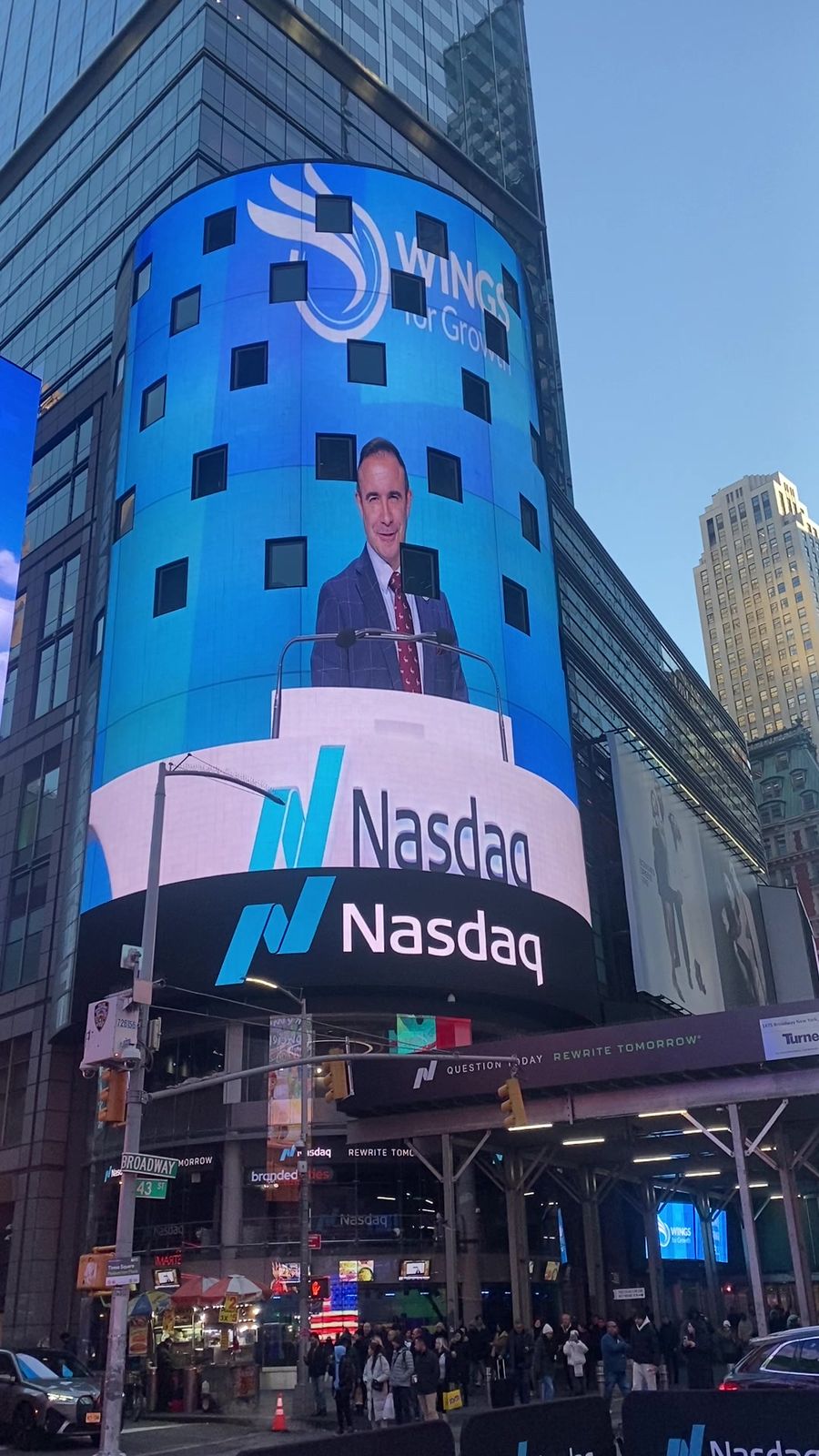
 MIT Technology Conference
 Delphi Group



 Java Pro Live
MIT Technology ConferenceDelphi GroupJava Pro Live
Java Pro Live
MIT Technology ConferenceDelphi GroupJava Pro Live
Tell Joe about the engagement. The more detail here, the faster he can give you a straight answer.
The New Bottleneck is now available. Choose your preferred format below.
Get Access To Diagrams / Stay updated — get notified when more formats launch: